
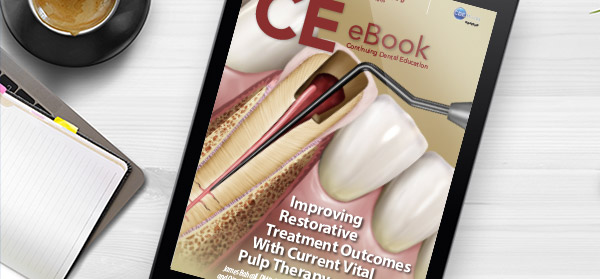
By James Bahcall, DMD, MS, FICD, FACD; Seema Ashrafi, DDS, MS; and Qian Xie, DDS, PhD
The clinical goal of any restorative treatment should be to maintain dental pulp vitality. The pulp tissue is necessary for tooth nutrition, innervation, and immunocompetency. Maintaining the vitality of the dental pulp increases a tooth’s mechanical resistance and long-term survival. Vital pulp therapy is performed clinically to preserve and maintain the health of the pulpal tissue in cases of pulp exposure due to trauma, caries, or restorative procedures. Pulp capping, pulpotomies, and apexogenesis are clinical examples of vital pulp therapy. Over the last several years, vital pulp treatment has changed in regard to procedure and materials used. This CE article will provide the clinician with details regarding these changes in clinical vital pulp therapy.